
ElkMaster
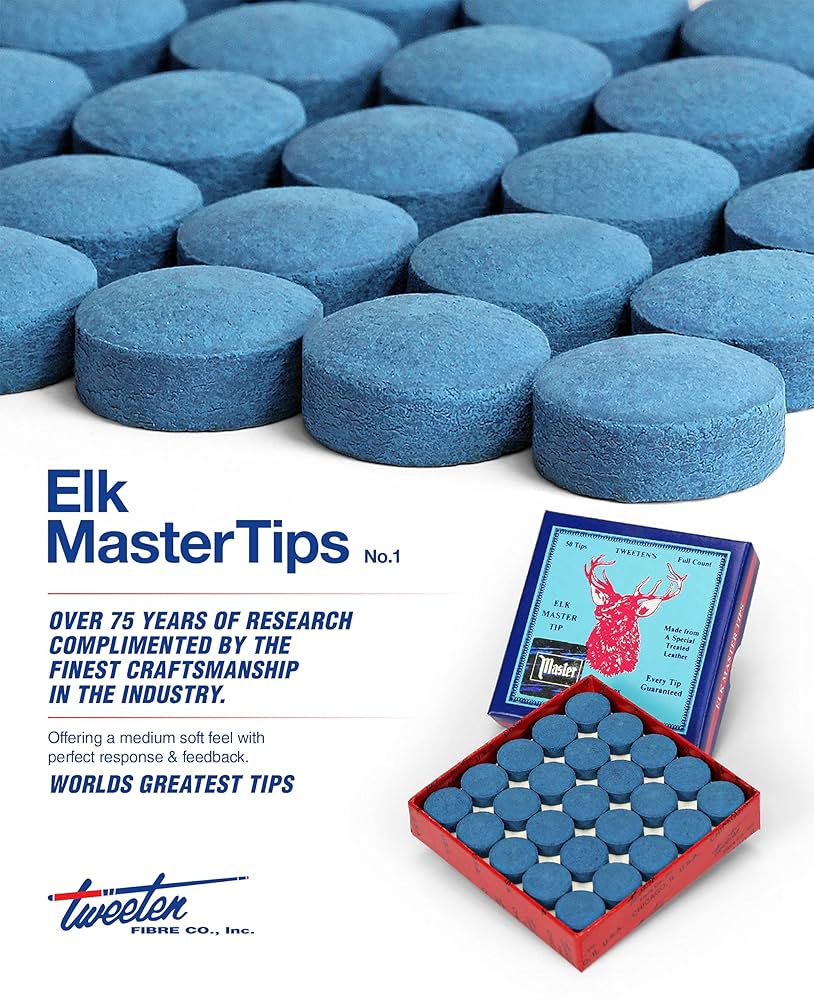
Few names in cue sports equipment have endured as long as the ElkMaster cue tip. For more than a century, this unassuming pressed-leather tip has been a staple in pool halls, snooker clubs, and on home tables around the world. Its story is one of tradition, accessibility, and a lasting reputation for feel, even as modern laminated tips have changed the landscape of cue sports.
Origins and Early Popularity
The ElkMaster tip traces back to the early 20th century, when cue makers sought a dependable, mass-produced leather tip that would offer grip and control without requiring constant replacement. Manufactured by Tweeten Fibre Company of Chicago—the same firm behind Master chalk and Triangle tips—ElkMaster quickly gained a following. Its defining traits were softness, affordability, and widespread availability. Unlike harder tips of the era, ElkMaster’s pressed leather construction gave players a cushioned contact that absorbed impact and held chalk exceptionally well.
By the 1950s through the 1980s, ElkMaster was practically the “default” tip on countless cues sold worldwide. Many pros of earlier generations grew up playing with it, and club owners favored it because they could purchase them cheaply in bulk to install on house cues. For aspiring players, ElkMaster was often the very first upgrade they tried after wearing out a stock tip.
Why Players Loved It
The ElkMaster’s softness is its most celebrated feature. A softer tip compresses more on contact, giving players a sense of “grab” on the cue ball that makes applying spin easier and more forgiving. This feel-oriented quality helped generations of players develop finesse and touch. Additionally, ElkMasters were easy to shape and install, which made them attractive to cue technicians and hobbyists alike.
However, softness came with trade-offs. ElkMasters tended to “mushroom” at the edges and required frequent trimming and reshaping. Because they were pressed leather, quality could also vary from batch to batch. Dedicated players learned to live with these quirks, but they left the door open for innovation.
The Rise of Layered Tips
In the 1990s, a revolution began with the introduction of layered tips—most famously Moori tips from Japan. By laminating thin layers of treated pigskin, manufacturers achieved unprecedented consistency, hardness control, and longevity. Other brands like Kamui, Zan, and Taom followed, each promising better spin, reduced maintenance, and more predictable performance.
Compared to ElkMaster, layered tips lasted longer, deformed less, and required less reshaping. They also paired well with modern chalks, which allowed players to generate extreme spin with less miscues. Professionals quickly embraced the new technology, and by the 2000s, layered tips dominated the pro circuit.
ElkMaster Today
Despite the surge of modern brands, ElkMaster still maintains a loyal following. Many league players and casual shooters appreciate its price—often a fraction of layered tips—and its classic soft hit. Some cue enthusiasts even “burnish” or modify ElkMasters into so-called “milk dud” tips by soaking and pressing them, creating a more durable version with a unique hit that blends old-school feel with added firmness.
For traditionalists and players on a budget, ElkMaster remains relevant. For those seeking ultimate consistency, longevity, and professional-level performance, brands like Kamui and Taom have taken center stage. In this way, ElkMaster occupies a niche as both a historic icon and a practical choice for players who value touch and affordability over high-tech precision.
You might also be interested in Why Precision Cue Tip Fitting Matters
Contact us today to explore our expert insights, premium cues, and personalized recommendations. Cue Junction is your most trusted cue dealer in Spain. Visit our Facebook page to like and follow us. Your next great game starts here!