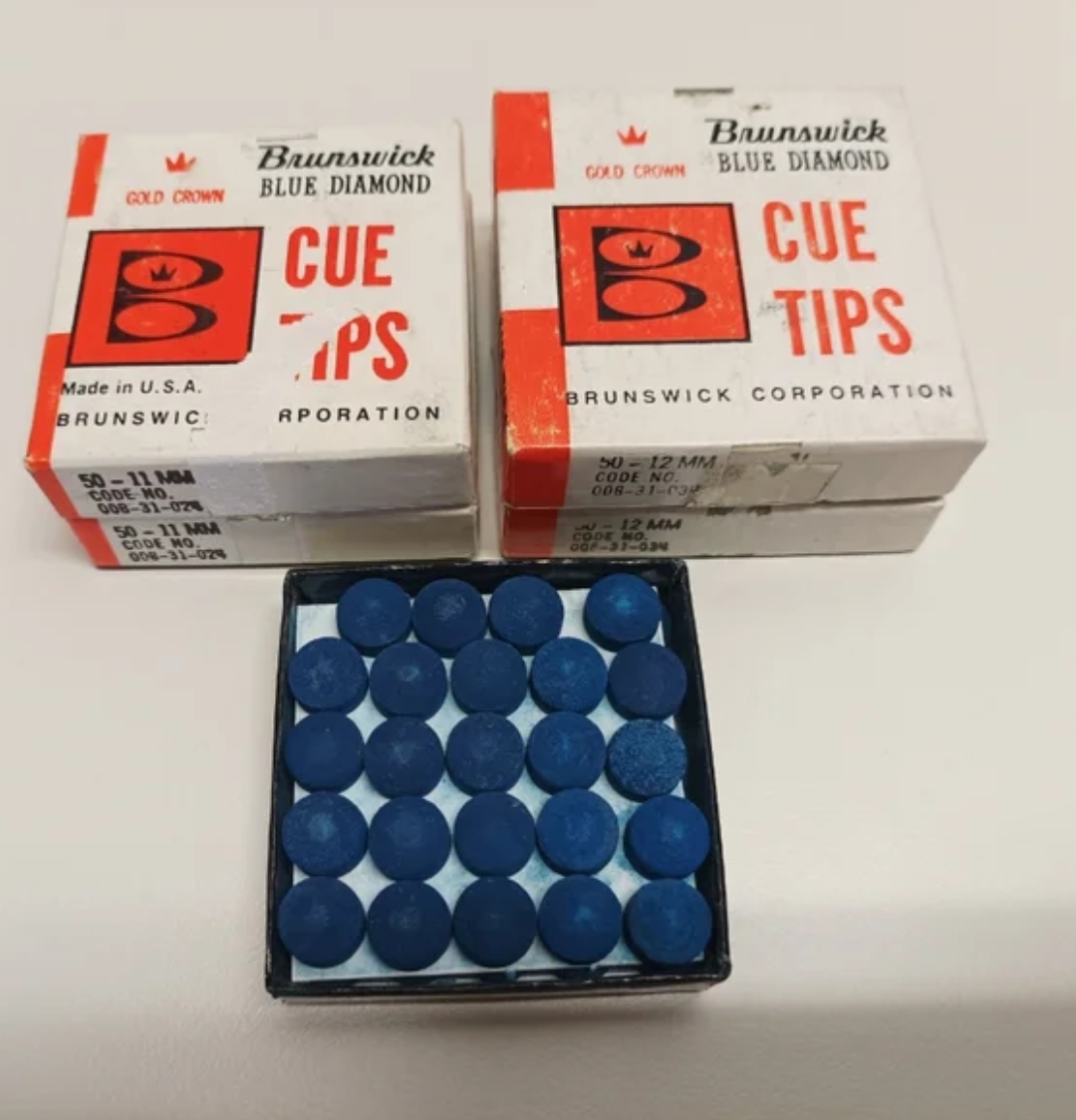
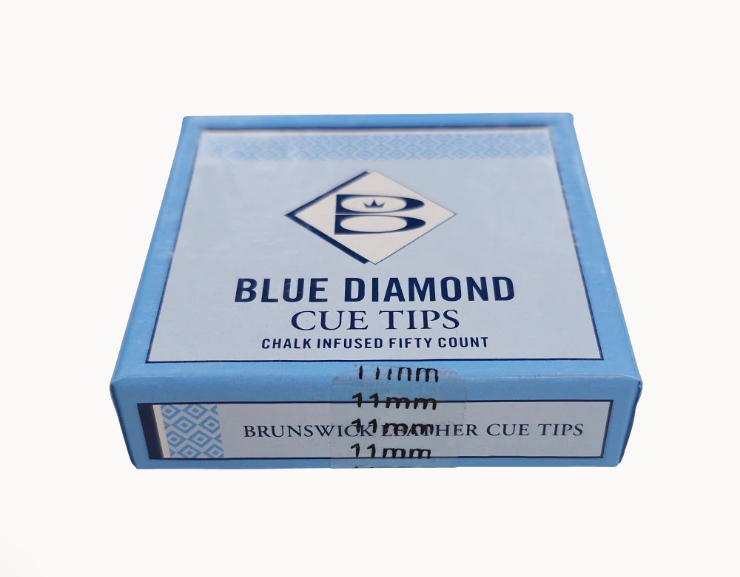
In the past, if you walk into a snooker hall or a traditional pool room anywhere in the world, you will likely spot a familiar little blue box tucked away in a player’s case. That box contains Brunswick’s Blue Diamond cue tips. Arguably the most recognizable single-layer leather tips ever made.
While laminated multi-layer tips have dominated the modern market for custom pool cues, the classic Blue Diamond remains the gold standard for generations of cueists. Especially in the world of snooker and English billiards. But how did a tiny piece of blue leather achieve such legendary status?
The Birth of the Blue Standard
To understand the Blue Diamond, you have to look back at its manufacturer, Brunswick Billiards. Founded by John Moses Brunswick in 1845, the company quickly grew into an industrial giant. Pioneering table engineering and billiard accessories.
As precision play evolved in the early 20th century, players demanded more consistency out of their equipment. Early leather cue tips varied wildly in density. Leading to frequent miscues when players attempted to apply spin (or “english”) to the ball. Brunswick recognized the need for a standardized, premium component that green-cloth athletes could rely on night after night. They developed a unique manufacturing formula that would become the foundation of the Blue Diamond line.
The Secret Recipe: Buffalo Hide and 40,000 Pounds of Pressure
What sets the Blue Diamond apart from its contemporaries isn’t just its striking hue, it is the painstaking engineering process behind it. While many entry-level tips are stamped out of basic cowhide, genuine Blue Diamonds are crafted using hand-selected water buffalo hide. Buffalo leather provides a naturally tight fibrous structure that offers an optimal balance between elasticity and structural firmness.
To turn this raw material into a world-class sporting accessory, Brunswick uses a specialized multi-step process:
- Silica Infusion: The leather is deeply infused with a “velvet-grade” silica compound. This infusion is the secret behind the tip’s exceptional chalk retention, drastically reducing the friction-less slip that causes miscues.
- High-Pressure Molding: Each individual tip is compressed under an astonishing 40,000 pounds of pressure. This immense compression ensures that the single-layer leather achieves uniform density throughout.
- Chalk Pre-Infusion: The iconic blue color isn’t just cosmetic; the leather is chemically treated and pre-infused with chalking agents to ensure it grips the cue ball reliably from the very first strike.
The Snooker Connection
While highly valued by casual pool players, the Blue Diamond cemented its legendary status across the Atlantic in the UK, Europe, and Asia within the snooker community.
Snooker is a game of extreme margins. With smaller, lighter balls (52.5mm) and narrow cue tapers (frequently ranging from 9mm to 11mm), any variation in tip density can spell disaster during a frame. The medium hardness and reliable feedback of a compressed 9mm or 10mm Blue Diamond tip made it a favorite among club players and world-class professionals alike throughout the mid-to-late 20th century. It offered a crisp feel and unparalleled cue ball control without the spongy deflection often associated with softer leather.
Standing the Test of Time
Today, the billiards landscape is filled with high-tech. Multi-layered pigskin tips cost upwards of €30 a piece. Yet, the modest Blue Diamond continues to hold its ground. It represents an era of billiard history where simplicity, craftsmanship, and pure player feel mattered most. Whether you are aiming for a maximum 147 break on a snooker table or defending your home turf in a local 8-ball league, gluing on a classic Blue Diamond connects you directly to over a century of billiard tradition.
You might also be interested in The History of the Elkmaster Tip or Why Precision Cue Tip Fitting Matters and Glue Options for Cue Tip Installation.
Contact us today to explore our expert insights, premium cues, and personalized recommendations. Cue Junction is your most trusted cue dealer in Spain. Visit our Facebook page to like and follow us. Your next great game starts here!