
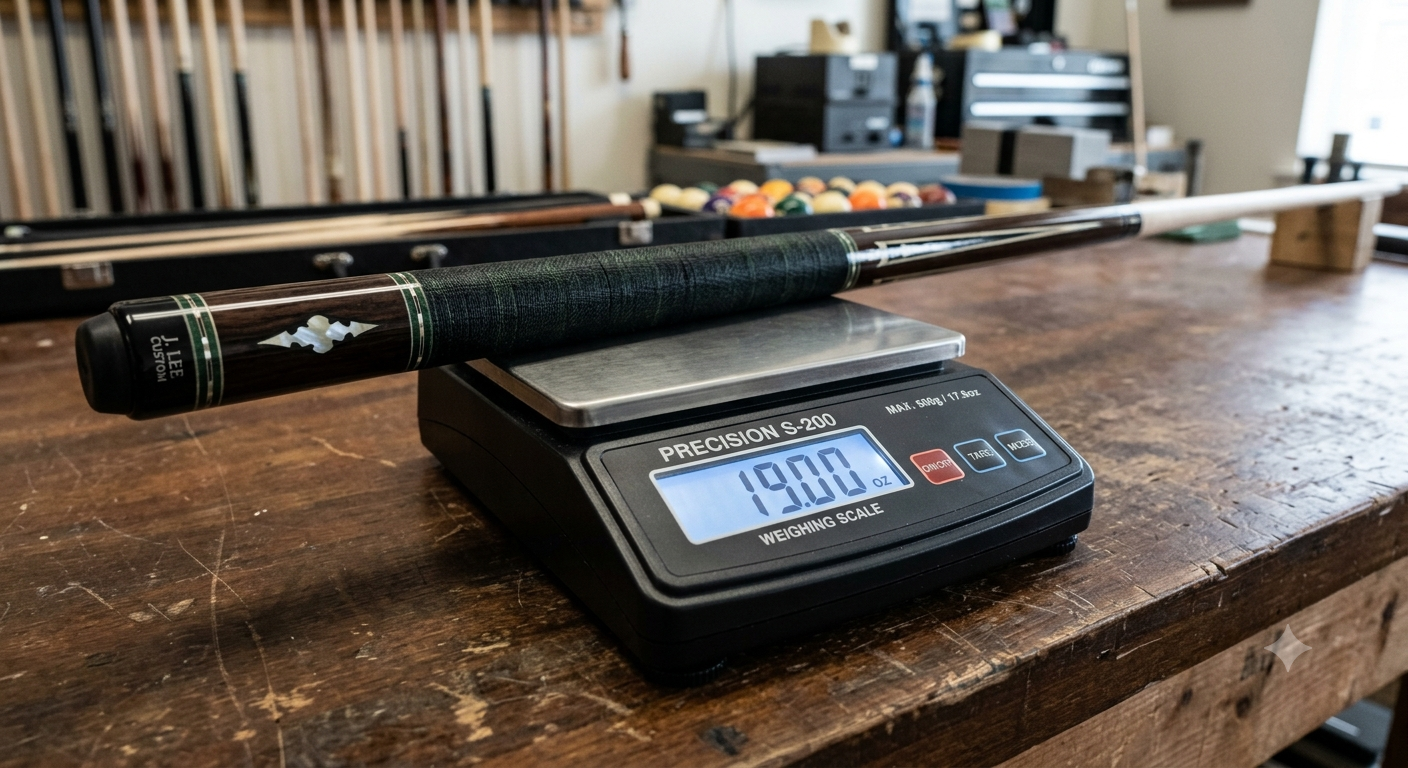
Whether you are stepping up to the table for a casual weekend game or lining up a crucial shot in a local tournament, your pool cue is an extension of your arm. Finding your perfect match is crucial. But have you ever wondered why some cues feel like a magic wand while others feel like a clumsy piece of lumber? It usually comes down to two highly critical, often misunderstood factors: weight and balance. Learn why weight and balance matter in pool cues by reading on.
Getting these two elements right can completely transform your accuracy, cue ball control, and overall confidence. Here is a breakdown of why they matter and how to find your sweet spot.
The Weight Debate: Heavy vs. Light
Most standard pool cues weigh somewhere between 17 and 21 ounces. While a couple of ounces might not sound like a lot, in the physics-heavy world of billiards, it changes everything.
Heavy Cues (20–21 oz)
A heavier cue carries more natural momentum. Because the stick has more mass, you don’t have to swing as hard to generate power.
- The Benefit: They are fantastic for long, straight-in shots and power breaks because the weight helps maintain a straight, steady follow-through.
- The Downside: You sacrifice a bit of “feel” and delicate control. If you need to apply a tiny touch of finesse or complex spin (English) to the cue ball, a heavy cue can feel a bit numb.
Light Cues (17–18 oz)
Lighter cues require you to generate your own speed through a faster arm stroke.
- The Benefit: They offer incredible feedback and precision. Because you are in total control of the acceleration, it is much easier to execute delicate safety play or subtle positional shots. Many professional players lean toward 19-ounce cues for this exact reason.
- The Downside: Any slight hitch or tremor in your stroke will be amplified by a lighter cue, making your mistakes more obvious.
Balance Point: Where the Magic Happens
Two cues can weigh exactly 19 ounces but feel completely different in your hand. Why? The balance point. This is the physical pivot point where the cue balances perfectly on your finger, usually measured from the butt end of the cue.
Standard production cues typically balance between 18 and 20 inches from the butt.
Forward-Balanced: If the balance point is shifted further toward the tip, the cue will feel heavier in your bridge hand. This forward weight helps guide the cue along a straight path, preventing your hand from steering off-target during the stroke.
Rear-Balanced: If the weight is concentrated in the butt, the cue will feel incredibly light and nimble in your hands. This is highly favored by players who love to use aggressive spin and need quick, snappy wrist action.
How to Decide What is Best for You
There is no single “correct” weight or balance point in pool—there is only what is correct for your stroke, height, and playstyle.
If you have a fast, aggressive stroke, a heavier, forward-balanced cue might help slow you down and smooth out your mechanics. If you have a slow, deliberate stroke and love precise positional play, a lighter, rear-balanced cue could be your ticket to the next level.
The best way to know is to test different setups. That is where Cue Junction Spain comes in. Choosing a cue purely online based on a number can be a gamble. The team at Cue Junction Spain helps you decide what is best for you by breaking down the nuances of different weights, taper styles, and balance configurations. They ensure you don’t just buy a beautiful cue, but one that actively works with your natural biomechanics.
Don’t let a poorly balanced cue hold your game back. Take a closer look at what you’re shooting with. Your next century break or tournament win might just depend on it.
You may also be interested in How to Choose the Perfect Pool Cue for Your Game
Contact us today to explore our expert insights, premium cues, and personalized recommendations. Cue Junction is your most trusted cue dealer in Spain. Visit our Facebook page to like and follow us. Your next great game starts here!